 » Study » Potential student research projects » Available student project - Building an international radon network for low-background physics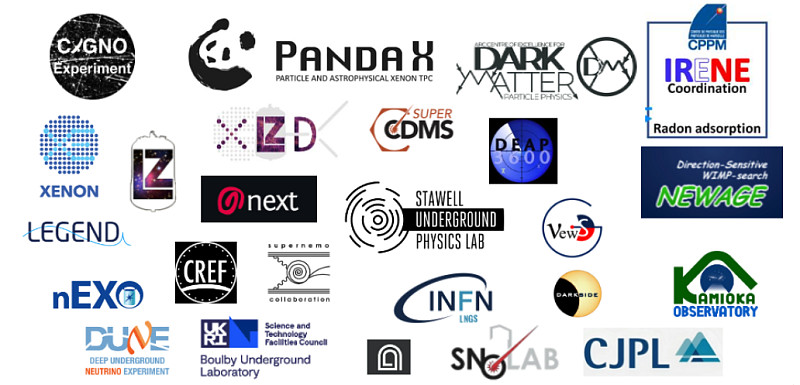
Radon is one of the most important radioactive backgrounds affecting experiments searching for rare-events, including dark matter interactions and neutrinoless double-beta decay. As these experiments become increasingly sensitive, improved measurement and control of radon is required to reach their future sensitivity goals.
Radon measurements are performed by laboratories around the world, but much of the underlying data on material emanation, filtration performance and radon suppression remains experiment-specific. Measurements are often made under laboratory-dependent conditions and using different analysis methods, making results difficult to compare directly and limiting the ability of the international community to share and interpret measurements consistently
This project will contribute to the emerging Radon Zero Backgrounds network, which brings together researchers working on radon measurement and mitigation in low-background physics. The student will contribute to two major activities:
Students will gain hands-on training in detector physics and low-background techniques while participating in an international research collaboration, with opportunities to contribute to scientific publications and potentially visit collaborating international radon facilities.
This project suits students motivated by experimental, hands-on hardware research. No specific background is required.

 Menu
Menu
 Search


