 » Study » Potential student research projects » Available student project - Tracking radon-induced backgrounds in the CYGNO directional dark matter detector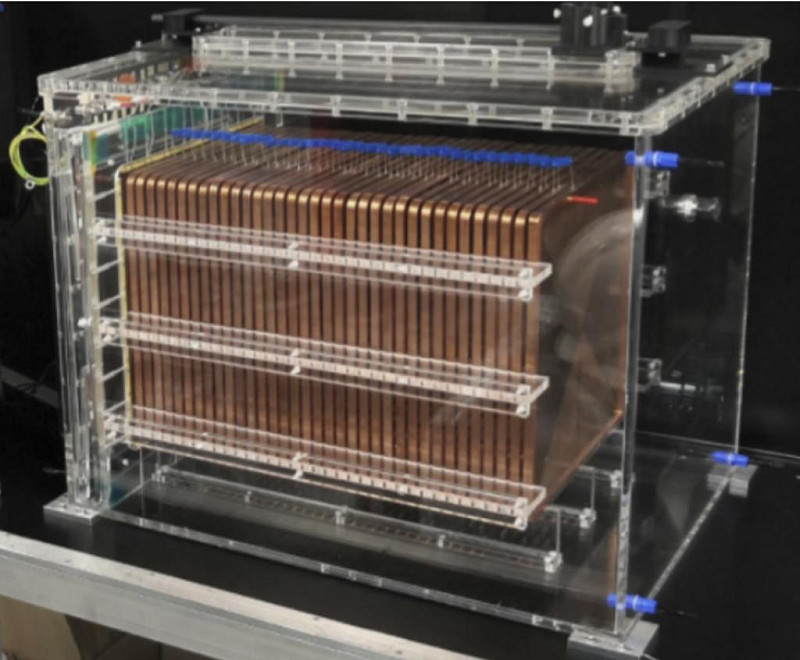
The direct detection of dark matter requires extremely sensitive detectors capable of observing rare interactions. A major limitation to these experiments is background radiation, particularly from radon, a naturally occurring radioactive gas that can contaminate detector volumes and produce signals that mimic dark matter events.
In the CYGNO experiment, a directional dark matter detector based on a gaseous Time Projection Chamber (TPC), radon decay products have been identified as a significant source of background. These decays produce both alpha particles, which are relatively easy to identify, and low-energy beta particles, which are more difficult to detect and can overlap with potential dark matter signals.
This project will develop a simulation framework to model radon-induced backgrounds within the detector. The student will construct an event-by-event model of the radon decay chain, tracking the spatial and temporal evolution of radioactive progeny. The simulation will incorporate key physical processes such as diffusion, recoil following decay, gas transport, and subsequent radioactive decays.
A central objective is to use alpha particle signatures as a calibration tool to infer the distribution and impact of more challenging background components, such as low-energy beta emissions. This approach enables the reconstruction of the spatial distribution of radioactive contamination within the detector volume.
The project will contribute to improving the understanding and mitigation of backgrounds in directional dark matter detectors, directly supporting the ongoing scale-up of the CYGNO experiment. The student will have the opportunity to analyse recent detector data and contribute to ongoing analysis within an active international collaboration.
This project suits students interested in particle physics, detector development, and computational modelling. No specific background is required. Students with experience or interest in programming (e.g. Python, finite modelling, Geant4) are encouraged to apply.

 Menu
Menu
 Search


