 » News & Events » A spin-based quantum computer: Donor qubit arrays and highly enriched silicon 28 with ion implantation
Qubits in a large-scale quantum computer using an architecture based on ion implanted dopants in silicon require a low background spin bath to prolong coherent quantum states programmed into the qubits. We have developed a method employing high fluence 28-Si ion irradiation of natural silicon to deplete the problematic nuclear spin I=½ 29-Si isotope from 47,000 parts per million (ppm) to below 2 ppm [1,2]. We are building Electrically Detected Magnetic Resonance devices to measure the donor spin resonances of ion implanted two million donor ensembles and have demonstrated clock transitions that are insensitive to magnetic noise in 75-As [3]. The next step is to repeat this experiment highly enriched silicon with the 123-Sb donor in which highly complex robust logical quantum states can be encoded on the I=7/2 nuclear spin donor states. Our technique to direct the 123-Sb donor qubits into ordered arrays addresses the problem of construction of a large-scale million qubit array as the first stage of the construction process.
The contributions of Experimental Condensed Matter Physics group at the University of Melbourne, the Photon Science Institute of the University of Manchester, and support from Australian and UK funding agencies are gratefully acknowledged.
[1] R. Acharya, et al., Comm Mat 2024.
[2] S.Q. Lim, et al., https://arxiv.org/abs/2504.03332
[3] R. Acharya, et al., 2025 in preparation, to be submitted to Phys. Rev. Mat.
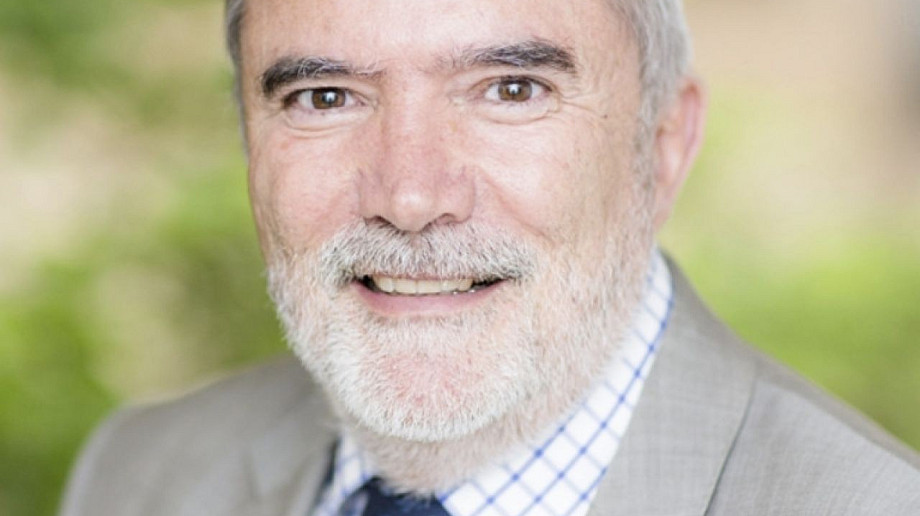
Professor David Jamieson applies ion beam physics to configure materials for emerging quantum technologies with Australian and overseas collaborators reported in over 300 publications. He has a PhD from Melbourne (1985) and had postdoctoral fellowships in the USA and UK. He served as Head of the School of Physics at the University of Melbourne, President of the Australian Institute of Physics and convener of the Australian Physics Decadal Plan working group. He is a Fellow of the Australian Institute of Physics, the Institute of Physics UK and recently held a Royal Society Wolfson visiting Fellowship to investigate engineered atomic quantum spins with UK colleagues. He often gives popular lectures on fundamental issues in physics.

Building:
160
Room:
Physics Auditorium

 Menu
 Search


