 » Study » Potential student research projects » Available student project - The Einstein-de Haas effect.
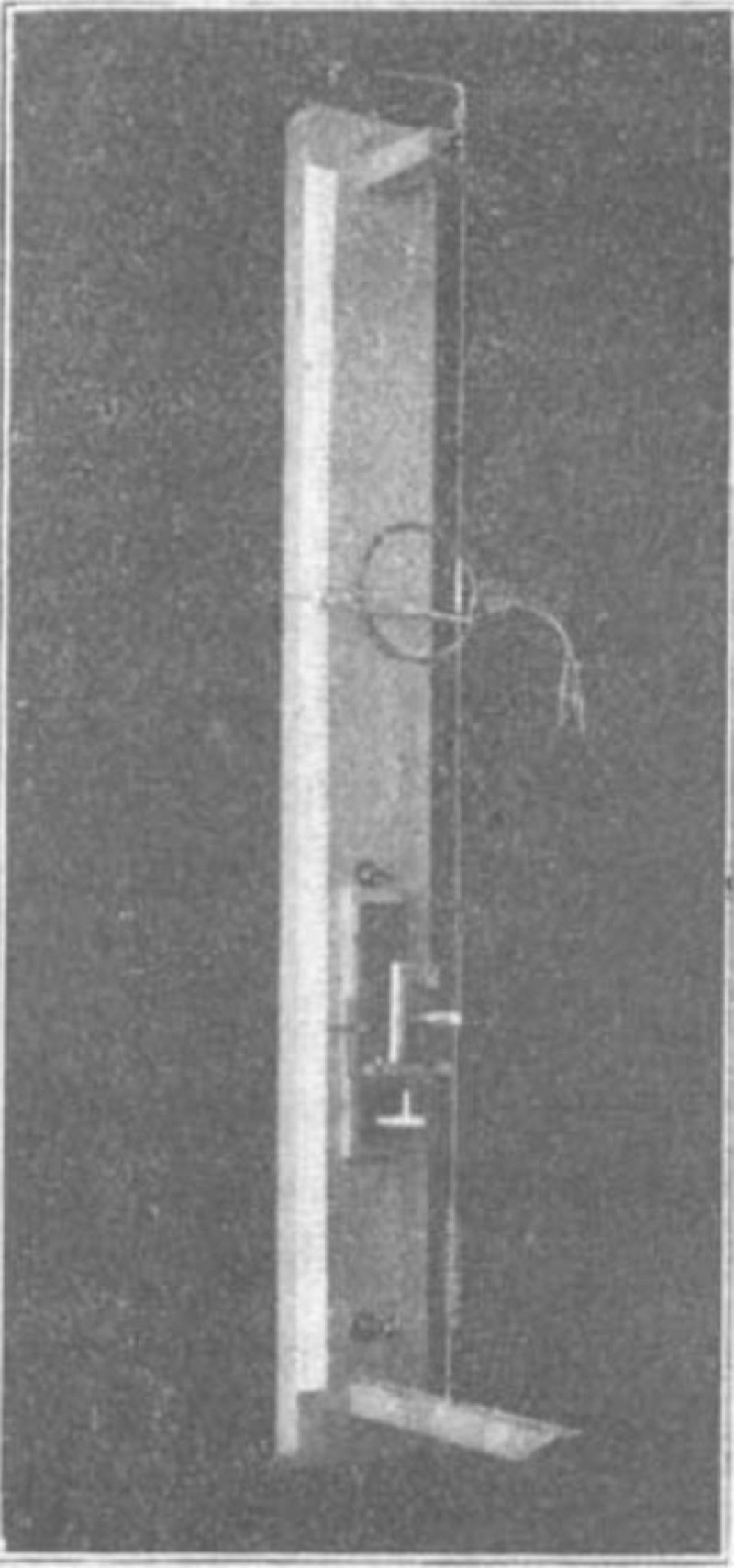
Electrons have angular momentum. This comes from the intrinsic quantum spin, as well as an orbital contribution in the case where they are bound to an atom in an orbital with angular momentum. In both cases, the angular momentum of the electron contributes to a magnetic dipole.
Magnetisation of a ferromagnetic material occurs when the magnetic dipoles are aligned. This can be achieved by placing a ferromagnetic material in a magnetic field. The electronic dipoles will become aligned to the applied field.
Now if that magnetic field changes polarity, the polarity of the electronic dipoles will also be reversed. By conservation of angular momentum, however, this must cause a rotation of the ferromagnetic material.
Einstein and de Haas published work in 2015 that showed this effect, and used their data to calculate the magnetic properties of electrons. Their published result was about a factor of 2 less than the now accepted value, but it did agree with a model at the time which assumed that the magnetic dipole was only due to orbital angular momentum. Had they done the experiment a little better (or maybe less influenced by a theoretical result that they wanted to match?!) then this experiment would have been one of the first measurements of electron spin.
The equipment required to build this lab is pretty simple. The analysis involves a bit of solid state physics, some damped-driven harmonic motion. The result, of showing an effect that can only be described by to a quantum property of the electron is kind of fun.
Some details and inspiration can be found here:
https://www.youtube.com/watch?v=mv7ZH3PHwpA
https://www.youtube.com/watch?v=uQ5w4_0S2l4

 Menu
 Search


